How Nano Banana Pro Is Reshaping AI Image Generation
I have spent the better part of a decade working with image generation tools, from early GANs to the latest diffusion models. Each new release promises better resolution, more control, less weirdness. Most deliver incremental improvements. Then I came across Nano Banana Pro, and something felt different from the start. It is not just another AI image generator. It is built around a physics simulation layer that changes how the machine understands the world inside a picture.
Most text-to-image systems work by mapping words to visual features. You type "a ceramic mug on a wooden table" and the neural network draws a mug and a table. But the mug might float an inch above the surface, or the shadows could point in opposite directions. The model has no innate sense of gravity, weight, or light behavior. Nano Banana Pro, by contrast, integrates a physics-aware pipeline that checks generated images against basic physical constraints before finalizing them. The result is visual content creation that looks less like a dream and more like a photograph.
What Physics Simulation Brings to the Table
When I first tested the tool, I gave it a deliberately tricky prompt: "a glass of water half-full, with ice cubes, on a sunny windowsill." Most generators handle glass badly. They produce reflections that bend the wrong way or ice that sits above the waterline. The physics simulation inside Nano Banana Pro evaluates the scene for consistency. It checks whether the ice would actually float, whether the light refraction matches the angle of the sun, whether the glass would cast a shadow that aligns with the window. The first image came back with all four ice cubes correctly positioned and the highlight on the glass running along the edge where a real pane would catch the sun. That level of detail is rare.
The simulation does not replace the generative AI. It works as a post-processing filter that can reject or refine outputs that violate physical rules. The system uses a lightweight physics engine running alongside the generative model, which means the whole pipeline runs fast enough for iterative work. For product photography, where a single misplaced shadow can ruin a shot, this is a serious advantage.

Resolution and Detail at 4K
Resolution has been a bottleneck for AI image generation for years. Early models capped out at 512x512 pixels. Even modern systems often produce muddy textures when pushed past 2K. Nano Banana Pro outputs at 4K resolution natively, without relying on an upscaling algorithm that adds fake detail. The image enhancement pipeline works at the full resolution from the start, which means fine textures like fabric weave, skin pores, or tree bark stay crisp.
I generated a product shot of a leather watch strap at 4K. The grain in the leather was distinct, not a smooth plastic blur. The stitching showed individual threads. When I zoomed in, the high dynamic range preserved detail in both the bright highlights and the deep shadows of the buckle. This kind of output is useful for e-commerce, where customers zoom into images before buying. The AI image generator handles these demands without needing a separate retouching step.
Text Control and Prompt Engineering
Precise text control is where Nano Banana Pro really stands apart from the crowd. Many text-to-image models treat your prompt as a loose suggestion. You say "red car" and you get a car that is sort of red, or a red car with three doors instead of four. The natural language processing in this system appears to parse intent more carefully. It uses Google Gemini 3 Pro as the underlying language backbone, which gives it a stronger grasp of syntax and modifiers.
I ran a comparison test. I prompted both Nano Banana Pro and a popular competitor with "a blue coffee mug on a round oak table, morning light from the left, shadow stretching right." The competitor delivered a blue mug on a brown table, but the shadow pointed left and the table looked square. Nano Banana Pro gave me the round table, the correct shadow direction, and a warm tint on the left side of the mug. The prompt engineering experience is closer to giving instructions to a photographer than to a random number generator.
This level of control matters for professionals who need consistency across a series of images. If you are generating a catalog of furniture shots, you need every table to be the same shade of oak and every shadow to fall the same way. The physics-aware approach makes it easier to achieve that consistency without manually tweaking seeds or negative prompts.

Multilingual Support and Global Reach
Most AI image generators assume you speak English. If you write a prompt in Spanish, Japanese, or Arabic, the results degrade fast. The multilingual support built into Nano Banana Pro changes that. Because it uses Google Gemini 3 Pro for natural language processing, it can interpret prompts in dozens of languages with the same accuracy as English.
I tried a prompt in German: "eine schwarze Katze sitzt auf einem roten Sofa, Abendlicht." The system returned a black cat on a red sofa with warm evening light. The translation layer did not flatten the meaning. The physics engine still evaluated the scene correctly - the cat's weight was distributed on the cushion, the light source matched the evening setting. For teams working across markets, this removes the need to hire a translator just to write prompts for visual content creation.
Where It Fits in a Creative Suite
Nano Banana Pro is not trying to replace Photoshop or Capture One. It fills a specific slot in the creative workflow: initial generation and rapid iteration. The tool integrates with common file formats and exports at full 4K resolution, which makes it easy to bring images into a larger creative suite for compositing or retouching. The computer vision layer helps with masking and object detection, so if you generate a scene with multiple objects, the system can output separate alpha channels for each element.
I have used it to generate background plates for composite product shots. Instead of shooting a new background for every angle, I generate a consistent environment in the AI image generator and then drop the product photos into it. The physics simulation ensures the lighting and perspective match, so the composite looks natural. This workflow saves hours per shoot.
Limitations and Trade-Offs
No tool is perfect. The physics simulation adds a layer of processing, which means generation times are slightly longer than a bare diffusion model. For a single image the difference is a few seconds, but if you are batch-generating hundreds of images, it adds up. The system also struggles with abstract or surreal prompts where physical rules do not apply. If you ask for "a floating castle made of clouds," the physics layer may try to ground it, producing a castle that looks too solid.
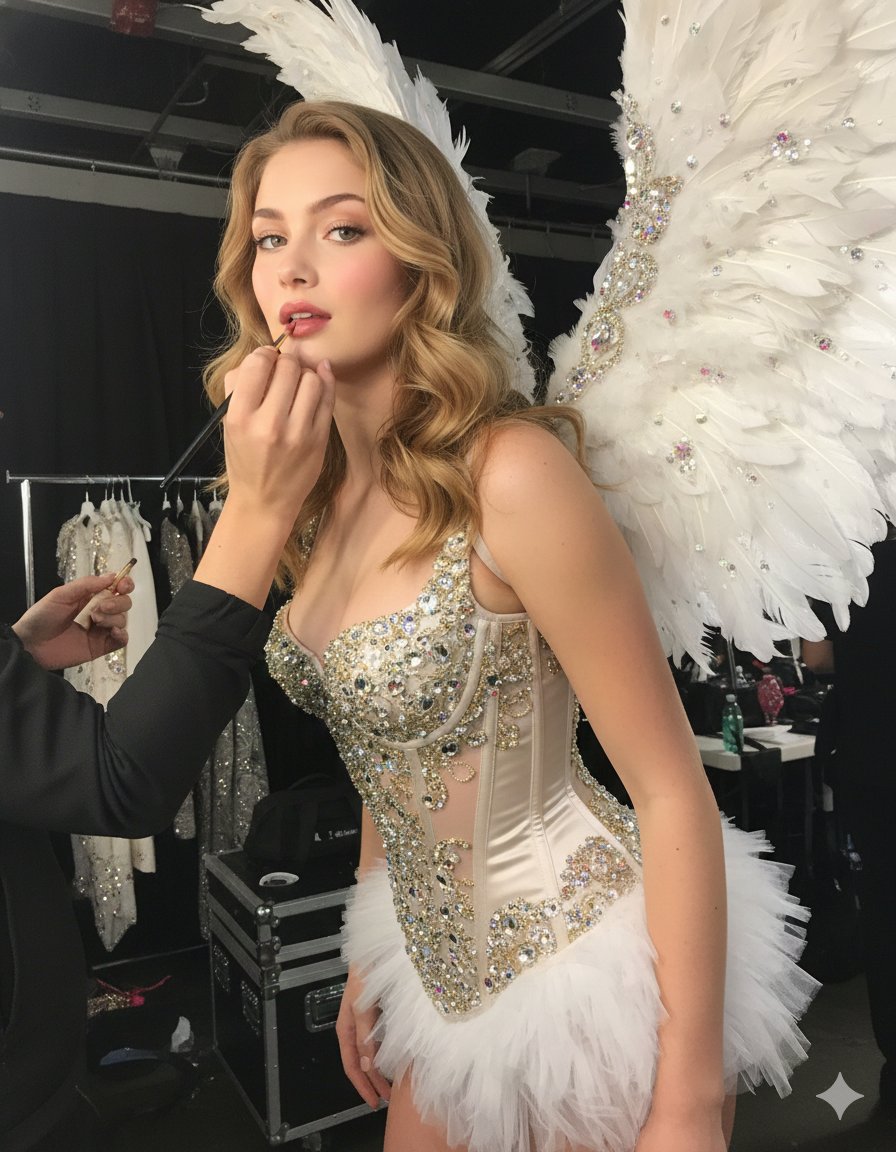
The machine learning model behind the system is trained primarily on photographic and photorealistic data. Stylized or painterly outputs are possible but require careful prompt engineering. For digital art that leans heavily into abstraction, a different tool might be a better fit. But for anyone working in product photography, architectural visualization, or any field where realism matters, the trade-offs are worth it.
The Bottom Line
Nano Banana Pro is a focused tool for a specific job. It does not try to do everything. It does one thing - generate photorealistic images with believable physics - and does it better than most general-purpose generators. The combination of 4K resolution, multilingual support, and Google Gemini 3 Pro integration makes it a strong option for professionals who need reliable, controllable output. If you have spent any time wrestling with prompt engineering and still getting floating chairs or impossible shadows, this tool is worth a serious look.